
Gilmore City Criminal History Checks
Start a Gilmore City record check with an address, road, or other exact event location. The official city emergency page lists two county sheriffs, which confirms that one city name can lead to two justice systems. A report follows the responding agency. A booking follows that county’s jail. A filed case follows that county’s prosecutor and clerk. Iowa DCI is statewide, but its response is a separate repository product.
- Fix the event location and determine whether it lies in Humboldt or Pocahontas County.
- Contact the sheriff for that county and ask which agency created the report and booking record.
- Search Iowa Courts Online in the matching county for a filed criminal case.
- If the location remains uncertain, repeat the sheriff and court checks for both counties.
- Use Iowa DCI for a releasable statewide name and exact-date-of-birth history, not as a citywide booking tool.
The order matters. Searching only Humboldt County can miss a Pocahontas-side matter, while searching only by the Gilmore City mailing address can hide which custodian created the record. A broad county overview is available through the Humboldt County criminal history resource, but boundary-specific routing should come first here.
Gilmore City Records, Two Sheriffs
The official Gilmore City emergency services page publishes Humboldt County Sheriff at 515-332-2471 and Pocahontas County Sheriff at 712-335-3308. That dual listing is the clearest practical fact in a Gilmore City record search. It means “Gilmore City incident” is not enough information for a reliable public-record request.
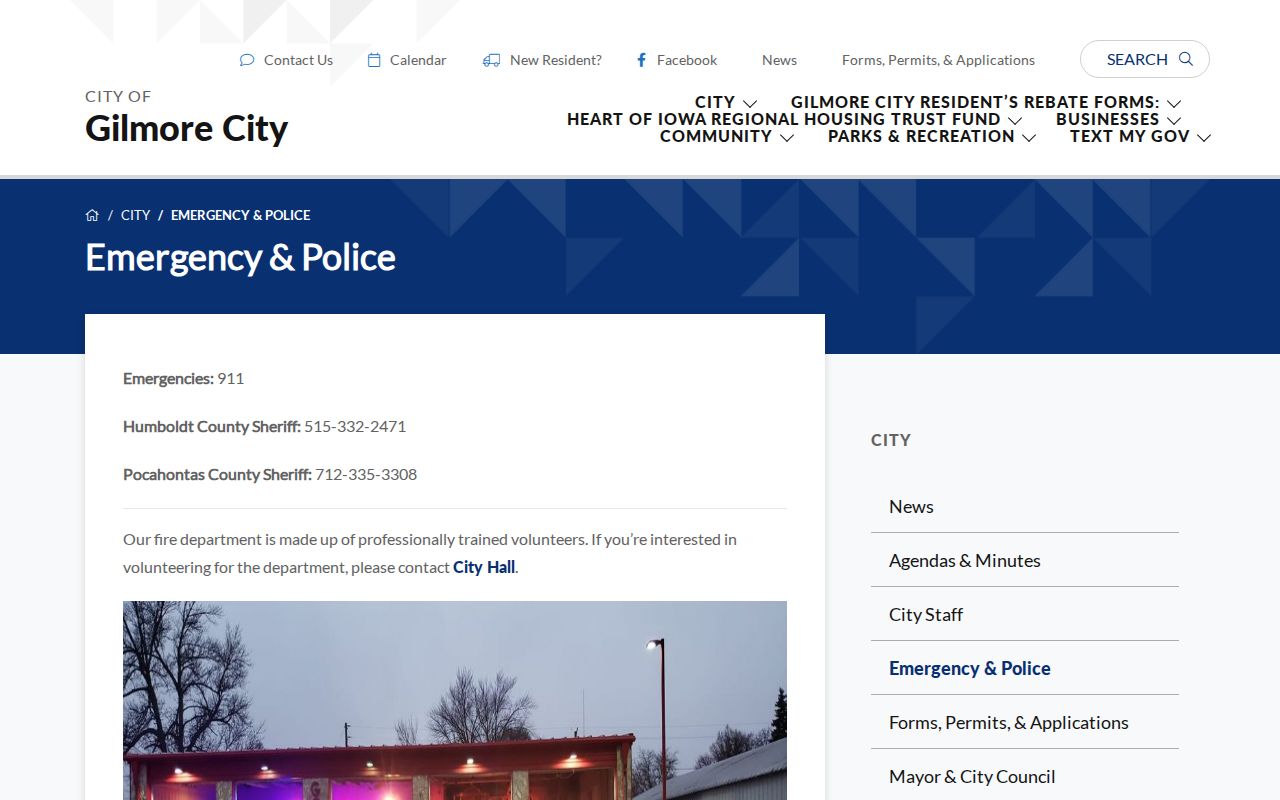
The city source supports a two-county contact plan without suggesting that City Hall controls either sheriff’s files.
| Event Side | Law-Enforcement Start | Court Route |
|---|---|---|
| Humboldt County | Humboldt County Sheriff | Humboldt County District Court in Dakota City |
| Pocahontas County | Pocahontas County Sheriff | Pocahontas County judicial institutions |
| Location uncertain | Contact both sheriffs | Search both counties where filters permit |
Do not send a Pocahontas-side requester to Humboldt merely because the postal place is Gilmore City. The county of occurrence is the better routing fact.
Records at the Gilmore City Police Department
No verified standalone Gilmore City Police Department, police records desk, department portal, request form, or police app was found. The city’s own emergency information routes law-enforcement needs to the two sheriffs. A record request should therefore name the correct sheriff or any other responding state agency after the event location is confirmed.
Ask the creating agency for the incident or arrest narrative. Give the date, exact location, report number if known, names and roles, and the precise record components. A sheriff that booked the person may hold a separate booking sheet, bond or hold entry, release entry, and transfer detail. Redaction may protect victims, minors, personal identifiers, medical information, and active investigative facts.
City Hall can help with geography or the right general office, but it is not the custodian of a sheriff booking file or an Iowa District Court docket. Keeping that role narrow prevents an informal routing question from being mistaken for a formal records request.
Locate Gilmore City Criminal Records
When an address is unclear, collect clues from the event itself: the responding agency, citation heading, report number, jail name, court county, or the place printed on a notice. A court Case ID can confirm county after a search. A booking document should identify the jail authority. These facts are stronger than a citywide name match.
If none of those clues exists, use a controlled two-county search. Call both sheriffs and explain that the county side is unknown. Search Iowa Courts Online with the relevant county filters where available. Open any result and verify county, case type, filing date, and party identity before attributing it. A shared name does not establish that a record belongs to the person sought.
Boundary rule: The exact place of the incident determines the likely sheriff, booking facility, prosecutor, and clerk, not the Gilmore City mailing name by itself.
Booking and Arrest Records in Gilmore City
There is no verified Gilmore City jail, arrest blotter, or citywide booking search. A Gilmore City arrest moves to the jail operation serving the county side where the event occurred. The booking record is distinct from the responding officer’s report. It records custody and intake, while the agency narrative explains the alleged event.
For a Humboldt-side incident, call Humboldt County Sheriff at 515-332-2471 because Humboldt County publishes no online roster or booking log. For a Pocahontas-side event, use the Pocahontas County sheriff and jail channels. Do not infer that the Humboldt process applies across the municipal boundary. After charges are filed, the relevant county docket becomes the place to track bond orders, hearings, amended counts, and disposition.
VINE can help with custody-change notices, but it is not a full historical record search. The official Iowa DOC Victim Services page explains IowaVINE support and state victim services.
Use notifications as a supplement to direct sheriff and court checks, not as proof that no Gilmore City record exists.
No Gilmore City Booking Database
A single online city search would blur the county line and the record type. Neither a Gilmore City portal nor a city jail database was verified. The right fallback is a short sequence: determine county, call the corresponding sheriff, request the creating agency’s report, and check the matching court docket.
The lack of one database does not mean the record is unavailable. It means public access remains custodian-based. Ask for an electronic copy if acceptable, identify each component, and request a cost estimate. The local fee, counter hours, request form, and turnaround must come from the office that actually holds the record because Gilmore City publishes no unified schedule.
Note: A new booking may precede the filed case, so a same-day court no-match can reflect timing rather than the absence of an arrest.
The Gilmore City Municipal Court File
Gilmore City has no separate municipal criminal court. Iowa’s unified District Court handles criminal matters. The correct county District Court depends on the county side of the event. Humboldt-side cases route to the Humboldt County court in Dakota City. Pocahontas-side cases use the corresponding Pocahontas County court institutions.
| Court Name | Iowa District Court in the county of the case, not a Gilmore City municipal court |
|---|---|
| Case Types Heard | State criminal matters, with magistrates handling simple misdemeanors and preliminary work |
| Case Lookup Channel | Iowa Courts Online, then the relevant county clerk or courthouse public terminal |
| What the Docket Shows | Case ID, county, charge, filing and status, events, hearings, public documents, judgment, and financial entries |
| Copies & Fees | Confirm current copy, certification, delivery, and turnaround terms with the relevant clerk |
A city payment function is not a criminal docket. Verify the county and case category on every result, then read the charge history through the final disposition.
Gilmore City Humboldt-Side Court Records
For a Humboldt-side Gilmore City matter, law-enforcement and court records split between two places. The Humboldt County Sheriff works from 430 Sumner Avenue in Humboldt. The Clerk of District Court works at 203 Main Street in Dakota City and can be reached at 515-332-1806. The free statewide docket should be checked before requesting a document.
Search the surname, add a first name or initial, narrow to Humboldt County, and open the Case ID. Confirm the case is criminal. If a public document is not attached, use the courthouse terminal or ask the clerk for a copy. The Judicial Branch Humboldt County page identifies the local court channel. Older files may be paper, microfiche, or digital, so provide an approximate year and document title.
Humboldt lies within the Second Judicial District for probation and parole services. The Iowa DOC Second District page describes the district office and programs.
Detailed supervision files are not a public Gilmore City lookup, though the court judgment may state a probation sentence.
How Gilmore City Records Reach County
The county boundary divides the local chain, but the record types remain distinct. The responding sheriff creates the agency report. That county’s jail creates a booking record. That county’s prosecutor and clerk create the judicial file if charges follow. On the Humboldt side, the Humboldt County Attorney handles the prosecutorial layer. Qualifying fingerprints and later dispositions may then reach Iowa DCI.
Record flow: County-side sheriff › County-side jail and court › Iowa DCI
DCI is the statewide layer that is not split by the Gilmore City boundary. Its $15 name check requires first name, last name, and exact date of birth. It is not a live city arrest search and may omit information that was never fingerprint-supported or is not releasable to that requester. Compare it with the correct local and court sources.
Reading Gilmore City Criminal Charges
The arresting description, booking charge, filed charge, and final judgment can differ. A Gilmore City search should preserve the label and date from each source. Do not turn an intake allegation into a conviction or use a sentence class to guess which county handled the case.
The official Iowa felony sentencing chapter provides the statewide source for felony punishment.
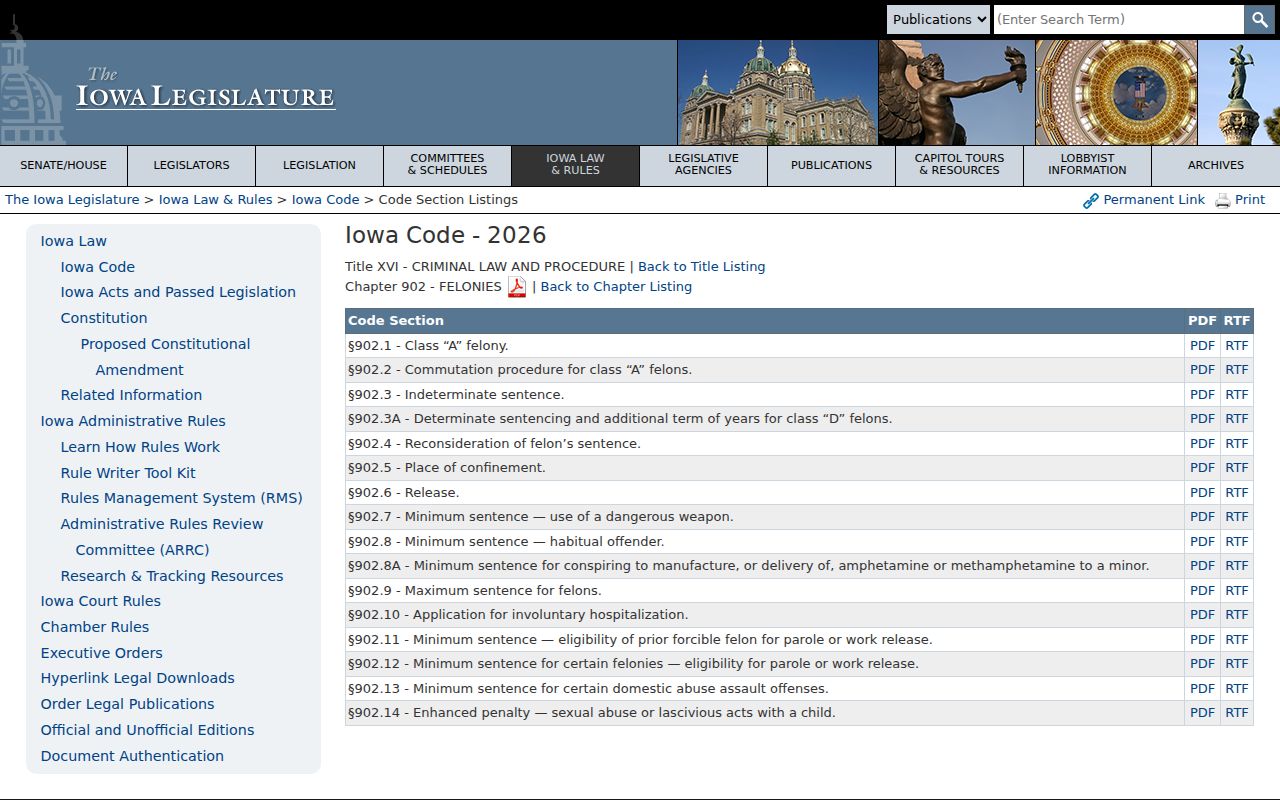
Felony classification belongs to the filed offense and current statute, not a broad city name search.
The Iowa misdemeanor sentencing chapter is the companion official source for misdemeanor punishment.
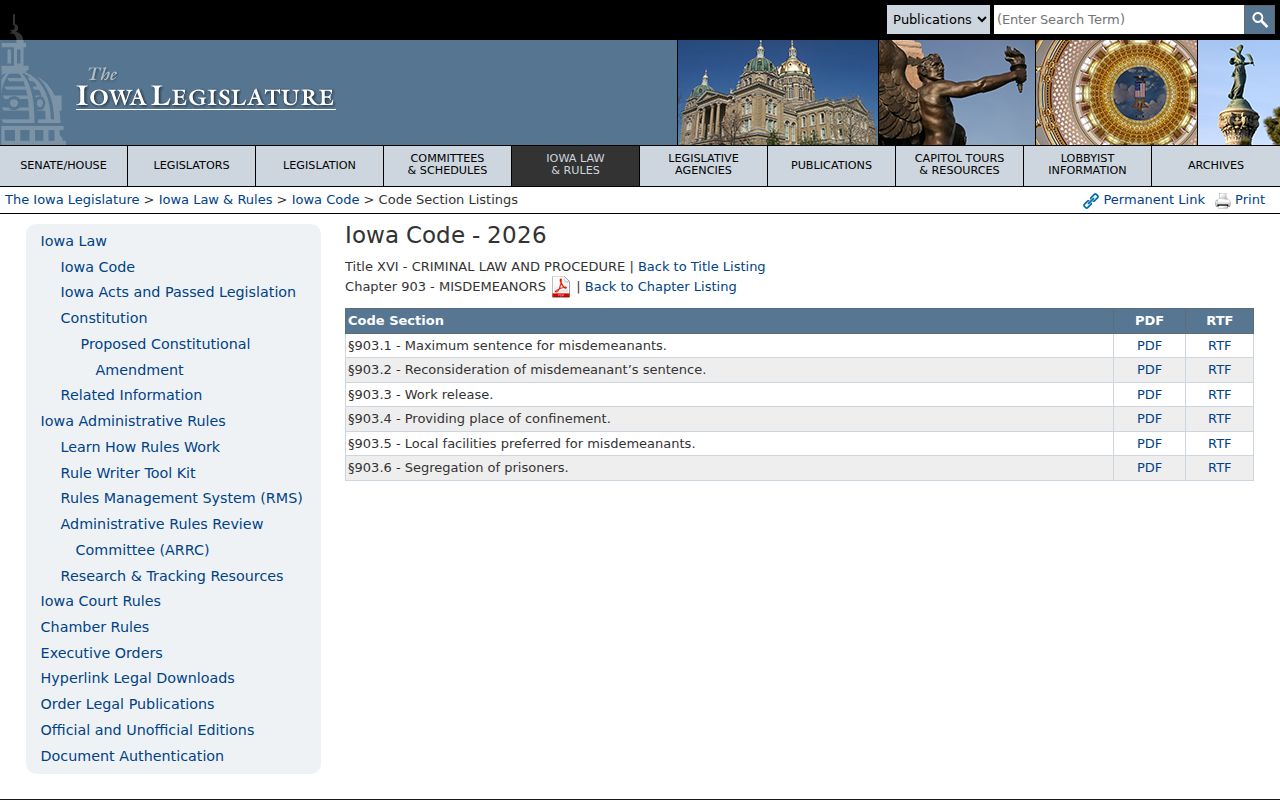
Special offense statutes can change ordinary penalties, so the court docket and current charged section remain essential.
- Booking charge
- The allegation recorded at jail intake, before the full court process.
- Filed charge
- The offense advanced in the relevant county court by the prosecutor.
- Disposition
- The final outcome of a count, including dismissal, acquittal, deferred judgment, or conviction.
Gilmore City Records and Population Boundary
Gilmore City ranked third among Humboldt County’s incorporated places using the full 2020 Census place population of 487. About 270 residents were on the Humboldt County side. Those are different geographic measures. The citywide number is suitable for ranking the place, but it cannot turn a Humboldt County offense total into a Gilmore City rate.
No official Gilmore City crime series was captured. Countywide sheriff figures should not be labeled as city crime, and data for one county side should not be presented as covering the whole incorporated city. Future statistics need an exact reporting agency, year, geography, and coverage statement.
The same caution applies to individual records. A postal city can be Gilmore City while the report and court case belong to Pocahontas County. For record routing, the boundary location outweighs the citywide population label.
Gilmore City Hall Record Routing
Gilmore City Hall is at 304 South Gilmore Street and publishes 515-373-6326. Hours are Monday through Friday, 8:00 a.m. to noon and 12:30 to 4:30 p.m. Staff may help a caller identify the county side or correct general office. They should not be described as custodians of sheriff booking data or District Court files.
Use City Hall as a routing point when an address or municipal boundary is unclear. Once the likely agency is identified, send the actual record request to that agency or clerk. This keeps the request within the Iowa public body that created or maintains the file.
Gilmore City Hall
304 South Gilmore Street
Gilmore City, IA
515-373-6326
Weekdays, 8:00 a.m.–noon and 12:30–4:30 p.m.
Gilmore City Record Access Rules
The Iowa Open Records Law applies to Iowa public bodies, but a Gilmore City request must still reach the public body that maintains the record. Ask the county-side sheriff or other responding agency for its report, the county jail for booking data, and the matching District Court clerk for the filed case. Reasonable actual costs may apply, and confidential material can be withheld or redacted.
Key Statutes:
Iowa Open Records Law grants inspection rights while preserving confidential categories and lawful redactions.
Iowa Code chapter 692 governs criminal-history dissemination, subject review, and record challenges.
Iowa Code chapter 232 restricts and provides sealing rules for juvenile records.
Unserved warrant matters, protected juvenile files, presentence reports, expunged cases, victim or minor information, medical details, and personal identifiers can be restricted. A no-match from one county or one online system is not conclusive. Confirm the boundary, use the correct originating office, and compare the event dates across the report, booking record, docket, and DCI response.